 MRC Cognition and Brain Sciences Unit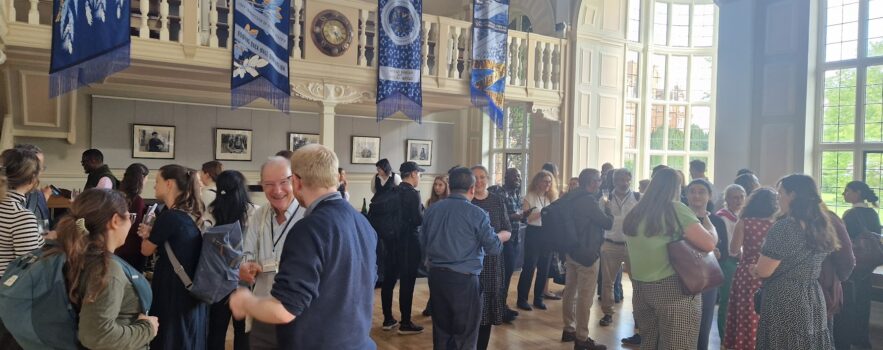
Rare Neurodevelopmental Conditions – meeting the post-diagnostic challenges
This one-day national research meeting was organised by Newnham Fellow Dr Kate Baker and her research group, and hosted at Newnham College, in partnership with the NHS Genomics and Mental Health Network of Excellence. The meeting brought together a diverse community of 80 stakeholders to address the ongoing challenges faced by individuals with rare neurodevelopmental conditions and their families. As the first event of its kind at a national level, it served not only as a forum for sharing current research and practice, but also as a foundation for building a sustainable, collaborative network across disciplines and sectors.
The event’s aim was to foster dialogue between researchers, clinicians, allied health professionals, advocacy groups, and individuals with lived experience. Through a programme of keynote talks, early career researcher presentations, lived experience contributions, and structured discussions, the meeting created space for exchanging ideas, identifying gaps in knowledge, and shaping priorities for future research. A central aim was to encourage inclusive participation and broaden engagement beyond those already active in research, recognising the importance of interdisciplinary perspectives and lived experience in informing meaningful and impactful work.
In her opening remarks, Dr Kate Baker framed the central challenge of the field as bridging the gap between biological understanding and mental health. While scientific advances have deepened knowledge of how biology shapes health across the lifespan, a disconnect remains in linking this to lived experiences of cognition, emotion, behaviour, and social life. Rare neurodevelopmental conditions were highlighted as a key space where these domains intersect.
These conditions affect around 1-3% of the population, and increasing genetic insight is transforming diagnosis, particularly for individuals with moderate to severe intellectual disability. Dr Baker described this as a turning point for individuals and families, creating new opportunities for understanding needs and providing tailored support, while also underlining the challenge of ensuring that diagnoses lead to meaningful, practical benefits.
She emphasised the complexity of this field across multiple dimensions: “rare brains,” referring to differences in brain development and function; “rare bodies,” encompassing physical health, pain, and fatigue; and the broader social context of family life, relationships, and access to support. These experiences are often shaped by isolation and systemic barriers.
Overall, the event represented an important step in navigating this complexity, bringing together diverse perspectives to share knowledge, identify priorities, and build new collaborations, with the aim of improving support for people living with rare neurodevelopmental conditions.
The event was generously sponsored by a donation from Robert and Sabrina Martin (via CUDAR), and the Newnham College Senior Members Research Fund. Newnham College looks forward to seeing the outcomes and future initiatives that emerge from this important work.