 MRC Cognition and Brain Sciences Unit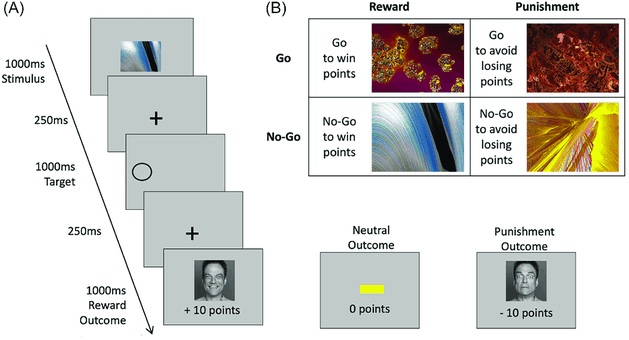
Why do we sometimes freeze when we should act—or act when we shouldn’t? These behaviours reflect Pavlovian biases: automatic tendencies to approach rewards and avoid punishments. Though often useful, such biases can interfere with decision-making and contribute to anxiety and depression.
In a preregistered, double-blind study with 800 participants, Hugo Fleming and colleagues tested whether these biases can be reduced through cognitive training. Over a week, participants practiced a decision-making task designed to create conflict between automatic impulses and goal-directed control. Compared with a control group, those who repeatedly trained on the “hard” conflict trials showed a striking reduction in Pavlovian bias—especially in their tendency to avoid when action was actually the optimal choice.
Computational modelling revealed that training specifically weakened the avoidance component of Pavlovian bias, providing the first clear causal evidence that such automatic tendencies can be modified through experience.
While the training did not yet transfer to other tasks or mood measures, it establishes a proof of concept: targeted, scalable cognitive exercises can strengthen top-down control over habitual responses. The findings suggest a potential pathway toward new digital interventions for anxiety and depression—conditions in which maladaptive avoidance plays a central role.
Read the full open-access paper here: https://psycnet.apa.org/fulltext/2027-02467-001.html