 MRC Cognition and Brain Sciences Unit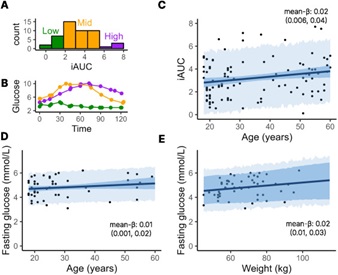
How do signals from the body shape the way we think and feel? A new preregistered study led by Hugo Fleming at the University of Cambridge explores how glucose control—the body’s ability to regulate blood sugar—relates to how people learn from rewards.
The research team recruited 48 adults who completed a glucose tolerance test, a reward learning task, and mental health questionnaires. By combining these data with computational modelling, the researchers found that individuals with poorer glucose control tended to rely more heavily on recent rewards when learning—suggesting a faster but less stable style of learning. This same learning pattern was linked to higher depression symptoms.
These findings point to a specific cognitive process—reward learning—through which metabolic health may influence mood and motivation. The results align with evidence from animal research showing that insulin modulates dopamine signalling in the brain’s reward circuits, suggesting that differences in metabolic function could alter how people process rewards and setbacks.
The study sheds new light on the striking comorbidity between type-2 diabetes and depression, identifying a possible neurocognitive bridge between the two. While correlational, the results raise the possibility that improving glucose regulation—through diet, exercise, or medication—could also help improve mood.
By integrating continuous glucose monitoring with computational psychiatry, this work represents a step toward a new field of metabolic psychiatry: understanding how the body’s energy systems shape mental health.
Read the full open-access paper here: https://doi.org/10.1016/j.bpsgos.2025.100645